
News connected to live markets
“We are definitely very hungry for work” - Artem1da about the casters of the new Dota school, the serpentarium and the “old guys”
Commentator Artem 'Artem1da' Kozhevnikov gave an interview specifically for him about his career and the role of a caster. We talked to him about how he searched for a job through Google, met Maelstorm and Inmate, and the difference...
Pick an outcome. Trade it beside the story.
Commentator Artem 'Artem1da' Kozhevnikov gave an interview specifically for him about his career and the role of a caster. We talked to him about how he searched for work through Google, met Maelstorm and Inmate, and the difference between new commentators and old ones.
From this material from Artem1da you will learn:
- Why did he have to play Turbo;
- How is eSports similar to Serpentarium?
- About the irremovability of commentators and the Zoomer approach to work;
- Working in tandem with Inmate and memes about Jacob from Twilight;
- And also about competition with “old school” commentators.
This and much more - in our interview!
Artyom, hello! Glad to hear from you! Could you tell us how you started getting involved in Dota and eSports?
Hello Max! And hello to everyone who will read this! I probably got to know Dota through friends. I came here through them. It was June 2018, if I'm not mistaken. That is, everything was already approximately approaching The International 2018 - then I decided to try Dota. I talked with my friends for a long time and heard that they play it all the time, but I was afraid to start because the game seemed very difficult to me. They told me: “Yes, download it, try it.”
It seems to me that the timing of my entry into Dota was perfect - it’s The International with a cool Battle Pass. My friends taught me how to play somehow, but I didn’t understand anything at all. I think for the first three months I just clicked skills with the mouse. And only then did I find out that they can be pressed on the keyboard.
In general, it was all because of friends: they constantly played and discussed Dota. Then I realized that I also needed to start playing. Another funny thing was that, playing on an old laptop, I had to finish the match in 30 minutes in Turbo, otherwise it would turn off during a longer game. Therefore, I didn’t really have a choice: I had to play only there and finish the game in 30 minutes.
You made quite a difficult acquaintance.
Well, to be honest, it was a fun game to play. Because if the game dragged on, then my computer would turn on for about ten minutes. I remember back in August, when there were catacombs where three of us had to run [event “Caves of the Wasteland” - Approx. ed. ], the game there always lasted more than 30 minutes, and every time I crashed there and got a ban. Yes, it was sad.
Before Dota 2 you were a commentator on Apex Legends: what kind of experience did you have there?
Good question. Initially, I was a professional player in Apex Legends, if you can call it that. My friends and I decided to put together a fun lineup - there was still Covid back then, right at the very beginning of it in March or April. And at that moment, guys entered the market with a project, one of the founders of which was a former Electronic Arts employee - Andrei Platunov. He and I still keep in touch.
They decided to found a platform for holding Apex Esports tournaments: we registered there for the first time, decided to play, somehow it worked out, and then for the first time I saw that this process was being broadcast sloppily on Twitch.
Subsequently, due to certain circumstances, I stopped playing, after which the organizers themselves wrote to me: “Here, let you try your hand at commentating.” And I obviously didn’t know how to comment at all. I knew absolutely nothing. And, probably, based on some basic videos on how to use OBS, and advice from the guys with whom I had already worked, I roughly understood how to launch broadcasts.
What were the main difficulties you encountered in Apex Legends when learning the basics of commentating?
Probably, when the Russian-speaking cast in Dota already at that time had some idea of how to stream, since there was RuHub and others, we had no understanding. Nobody had experience in Dota. Everyone was closely connected with the Russian-speaking Apex Legends community, but we didn’t have any dota players to ask them about something. Because of this, we simply did not understand how to broadcast. Everyone added some tricks of their own, for example, filming beautiful flights in advance - for this purpose we specially gathered in the lobby before the tournament. I wrote to my designer friends to make us beautiful timers and broadcasts. We designed the transitions from different freelance designers.
Subsequently, when things began to come together, we realized that we were doing pretty good broadcasts. And only then the guys started writing to different sponsors and started recruiting other people who were ready to invest in it. Probably the most outstanding moment was when they made, in my opinion, a series of tournaments for 1,000,000 rubles together with REDRAGON and Western Digital. But this was already around the moment when I left them: because of studies, a girlfriend and simply other life matters. I just continued to observe the project from the sidelines.
In any case, there was an awful lot of misunderstanding at the start. Nobody understood or knew anything, and it seems to me that all our enthusiasm here, where, roughly speaking, we were not paid anything, was very well fueled by the Apex Legends community. It seems to me that it is still quite friendly and continues to support Russian players, who even, in my opinion, performed at the Esports World Cup 2026.
After all this, was it difficult to change discipline, given that you didn’t get to know Dota normally at first?
Well, when I finished playing Apex Legends and commentating on it, I remember that I immediately had no desire to comment on Dota 2. At the time it was 2021, I wouldn't exactly call myself a commentator. I would call myself a person who was paid symbolic money, and he did it for some personal variety and simply to show people this or that person, if there was a desire to come cheer for someone specific. I wouldn't call myself a commentator. If you really want, you can find these broadcasts on the old twitch channel. I think they were even saved because of the affiliate program, but it was terrible. Now that I look at it, it was terrible. It was simply a narration of what was happening on screen.
Was it difficult to change discipline? Probably yes. The games may be competitive, but they have a radically different approach. When I finished playing and at least somehow commenting on Apex Legends, I didn’t play computer games at all for a very long time. For about a year and a half to two years I didn’t approach a PC at all. I rarely played Turbo with friends. Only closer to 2023 did I decide to get heavily into Dota 2.
When I moved to St. Petersburg, I actually had the idea of playing professionally, but then I remembered about my MMR, played a couple of scrimmages and realized how much time you need to devote to this game in order to achieve something in it. At the same time, at that time I already had to look for a job, study, and I realized that I would not become a competitive player. But I can try something in commenting. I thought about this for several months and realized that I needed to record demos in order to send them to someone.
Tell us more about your demos.
Demos are the commentator’s main weapon, which you can use if you want to get into a studio or project. There is, of course, a resume, but you practically stop using it after several years in this field. At the same time, there should always be demos. I wanted to try: whether it would shoot or not, I didn’t know. And I didn’t go into this field for money. Just to try.
For example, including broadcasts from studios like FISSURE and Paragon, watching The International 2021 - even though I didn’t play Dota normally back then, I followed the major tournaments - deep down in my heart I dreamed of being in the place of the casters and being a guide for the viewer to these tournaments, a transmitter of some cool emotions. And I decided to record demos for fun.
I looked at what was needed for this. My very first action, when such an idea appeared, I decided to type into Google search: “Work as a commentator in St. Petersburg.” And following the links provided, I was shown a competition for commentators from BetBoom and other requests like “how to become a commentator.” After putting some puzzles together, I decided to send my old Apex Legends demos from four years ago to FISSURE. They were not newly recorded, so they politely told me: “In my opinion, you sent us something a little wrong, record something else.” Well, later I started recording Dota. I sent demos to various regional branches like the Russian Computer Sports Federation. Well, that’s where it all began.
Let's finish the topic with Apex. Is there anything about the Apex Legends developers' approach to the game that you would like to see from Valve in Dota 2?
I feel like Apex Legends was ahead of its time when it came out in 2019. The game became a banger because not a single Battle Royale at the time of release had the Respawn Beacon mechanic - a rebirth beacon with which you can raise your teammate and give him a second chance. This was the first Battle Royal to implement such an opportunity. Because of this, Apex Legends was loved by so many: when you play with friends, if you are not a competitive player, no one needs to go somewhere for 20-30 minutes or sit in spectators. That is, you will play together all the time. In this regard, the Apex Legends developers have become innovators. And it seems to me that Dota 2 is missing something similar.
I also think that in order for Dota to become much more diverse, we first need to release everything that the community has been talking about for several years. For example, something like Aghanim's Labyrinth. If we take Apex Legends as an example, then remember this game as it was from 2019 to 2021, when the game was prime. Each new season was a fierce banger with a huge online and crashing servers, which still gave their charm, because you knew that a huge number of players now wanted to enter the game. The most colorful Battle Pass and a huge number of events over two and a half years. I myself didn’t play from the very beginning, but started from the third season, but it seems to me that in order for many more people to flock to Dota, we need to remember the developers’ approach to Apex Legends in its best years. That is, a lot of content and a lot of lore.
What exactly would you like to see in Dota based on lore?
Anyone who played Apex Legends will understand me, because at that time the developers began to release Stories from the Outlands - these are specific and long videos with a detailed story of one of the characters. Now, if this were implemented in Dota, it would be cool. But there is a problem - there are more than 120 heroes in Dota.
Would the theoretical release of Aghanim's Labyrinth change the current situation with falling online and desolation?
I think yes. It seems to me that all Dota players really want PvE content. I was most surprised when I saw that even advanced players wanted to play it - Satanic and 9Class talked about it. I thought they were just tough pubers and they were only interested in beating creeps. I was very surprised that they were also waiting for events. Apparently, this kind of PvE hunger strike leads to the fact that everyone agrees on one opinion - we want to play with friends and enjoy the game, where the rating will not matter.
Which casters did you follow in Dota before becoming a commentator yourself? Was there someone who most influenced your personality and work?
There were not only commentators, but also people in other directions. At the very beginning, obviously, it was Maelstorm - the person I decided to write to for about a month. Initially I was shy and afraid, but it was through him that I got to my first tier-1 projects. That is, he just took it, wrote it, uploaded the demos, and he passed them on to the necessary talent managers. And so, after some time, I was invited to the first Paragon broadcasts as part of closed qualifications. Through him, I gradually began to subscribe to all the commentators I knew about him: Inmate, y0nd, Eiritel and other tops.
I simply subscribed to them, looked at what they wrote, how they worked and what information they convey to the masses. But there are people who had a hand in my career and allowed me to become a good commentator; they also work in other directions. For example, these are talent managers. I would really like to highlight one of the talent managers currently existing on the market and just a good person who really helped me become what I am now - this is Yulia Rudneva. I think that she is the person who sometimes sees more potential in you than you do. I was lucky to meet her and work with her to this day. A very valuable person and colleague to me. Our acquaintance was, it seems to me, like that of all commentators. I wrote to her many times in a personal message, many times I sent her some information in the style of “when will they notice me” and “give me a chance to prove myself.” It was on one of these days that I was noticed - then I was applying for the recently shot Deadlock, there was supposed to be a tournament for it in Moscow. They didn’t take him on - I was too green. But she took us to an online tournament and said that she wanted to work together. And so began a long story that continues to this day. I am infinitely grateful to her for all the opportunities and trust. She is now a talent manager at Fonbet for esports, as well as at the TBD studio, responsible for covering the BLAST and Esports World Cup tournament series. Newbies, now you know exactly who to write to.
And from a “new school” commentator’s perspective, were there any challenges you faced?
It seems to me that the problem with many studios was the irreplaceability of commentators. That is, when some studios found a definitely good lineup, they became convinced that there was no point in changing it. It seems to me that this is a mistake. Either way, originality equals variety. You simply cannot drive the same one forever. Especially in the media sphere. This is simply impossible. This is comparable to a YouTube channel that you run with the same content. Recording the same Minecraft let’s plays in 2016 and today, obviously, there won’t be such huge views.
We still need to change and adapt. And Yulia is one of the few people who gave a lot of chances to young people. This doesn't only concern me. She provided an opportunity to show herself at some qualifications if she was a manager at major tournaments. Provided an opportunity at online events like CCT, which also covered the Russian-speaking caste until the beginning of 2026.
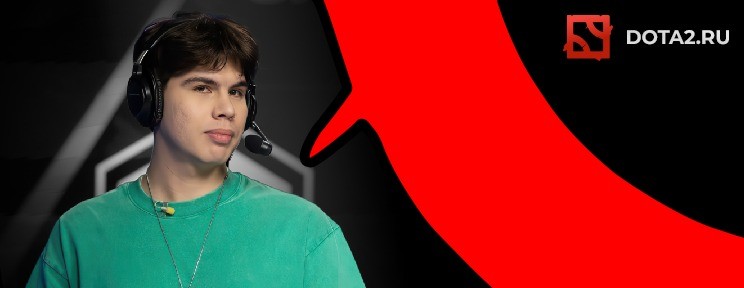
Artem1da with Inmate and Yulia Rudneva
Why did you decide that you wanted to be a commentator and not someone else, perhaps even in a different field?
Consciously, this understanding came to me after several projects, when I realized that each time I really do it better and many people like it, including me. Every time, finishing even some kind of low-level project like city or school competitions, with which I started commentating, I saw how I began to gradually grow. Even if in small steps. And everywhere they tell you: “You need to move on. You can become something strong, good and cheerful.” I actually started with a small St. Petersburg lunch, where they looked at my starting work and said: “Well, let’s try it.”
I think I saw after a few months that I might even have some kind of talent for this. A lot of cool factors came together here. For example, I studied at a humanitarian school-gymnasium, where they instilled in us a love of literature, languages, and simply managed to make good speakers out of us—that’s what I would call it.
Plus, I realized that every day I liked it more and more. I wanted to experience this feeling of the coolest events possible, where you are the face of the announced event in the public or on broadcast. And tens of thousands of people look at you, and also listen to your opinion, with which, of course, they may disagree, but the main thing is that you convey your emotion, and after that they write laudatory comments to you somewhere.
The latter, it seems to me, is a rarity for our community. However, it so happens that there is more negativity going on. But I noticed that at a certain point there were a lot more comments of praise. People even wrote in private messages: “Really, you’re doing very well. Keep going, we need young talent." My colleagues, who were much older than me, did the same. At that moment I realized that I needed to move on.
How do you manage to maintain emotional stability so that you can always remain pleasant and cheerful on air?
It seems to me that you really need to be able to rest in this matter and generally understand why you are doing it. That is, why are you going to comment on this or that game? It seems to me that anyone can describe what is happening on the screen: the only difference is that it will simply be less or more interesting to listen to.
To comment well, you really need to understand why you are doing this: what is the juice of exactly the card that you are going to cover now. Well, or what could be its dramaturgy. Perhaps the competing players were best friends in the past, but now they are sworn enemies. Maybe someone will set a new record, or maybe it’s simply your favorite team.
As I had, for example, at the Esports World Cup 2026 with PARIVISION. When I came to commentate on their matches, I understood that I would hype every game, even if they simply lost to zero. But I just really like this team because of their internal vibe and, probably, their new trio [ Noticed - Approx. ed. ], with whom I, albeit a little, managed to get acquainted at the previously held tier-2 tournament 1win Essence I.
How do you relax?
Understanding why you are commenting is wonderful and cool, but being able to relax is also important. I try very hard to go out a lot with my family and friends. This is how I restore my resources for the next major tournaments. Plus I try to read more somewhere. I also watch more educational information so that I can insert it later and somewhere at the right moment during the broadcasts with my certain, as many say, Zoomer approach - and they will be right.
I am 22 years old, and I have my own vision of a cool broadcast, which fits very well with many of my now older colleagues. It seems to me that you need to understand why you work in a particular field and be able to relax, not work 24/7, burdening yourself with a large amount of work.
If you think like that, then with my, probably, although not super-top, but good experience, you can work every day on different projects. But then the quality of the broadcast will drop almost three times. You will come to the broadcast without enthusiasm and simply understand that you will be paid for that day, but you will simply have zero interest in the game.
Did your concept of a break from work develop on its own or did you go through some difficult period that made you think about it?
Great let down. There was, but it seems to me that it happened in my life at that time due to my inexperience. This was when I was invited to test for the first time at Paragon at DreamLeague Season 25 in February 2025. Basically, working at this tournament online and offline, it seems to me, is very exhausting. Commentators, news people and spectators - they all get tired of this tournament because it is very long.
It's really exhausting. Its format is such that you comment, write articles and watch as a spectator, after which you don’t want to do anything. Because the tournament is really difficult. And they invited me to test for it - I worked with the guys for two weeks, and when they finalized the final day, I was already flying home, because there was no need to put me on the final. After that, while flying on the plane, I thought that I would come now and analyze my broadcasts. I’ll immediately immerse myself in literature. Because many guys gave me advice on my work, how to improve myself.
And I realized that when I arrived, I had not unpacked my suitcase for three weeks and was in some kind of apathy from myself. For there is also a second side to the coin - I would call it that. Even though you were working with professional, cool colleagues, but who already had several The Internationals behind them, you still felt some kind of pressure from the older generation. I felt that perhaps not everyone was happy with you. Some more, some less.
Well, it’s just that the format of a two-week studio for the first time, and also in another country, it seems to me, gives a certain blow to a young head, which happened to me. And after that I realized that something needs to be changed. You don't need to be so perceptive. Some things need to be listened to, while others should still be ignored. Don't absorb everything.
And, probably, a good demonstration of this experience happened just recently, when we had a marathon of several months of major tournaments, where there was DreamLeague Season 28, ESL One Birmingham 2026, FONBET MEDIA ELEAGUE Season 4 and BLAST Slam VII. There I just realized that even during short breaks I wouldn’t go in and play Dota. I will watch the broadcasts somewhere, go for a walk more often, breathe fresh air, and even do this before the broadcasts. Thanks to this, I didn’t get burned out at work. I managed to rest wisely and not let a lot of things other people say through me.
In one of your recent posts, you wrote: “About two years ago, I sent applications to all possible studios in order to have a chance of getting into the Russian-language cast and, in general, to understand how to get there.” What were the main difficulties you encountered during the search process?
Firstly, the unavailability of the people you need to get to some places much faster. Secondly, of course, competition. This competition was felt especially strongly at the very beginning, when, starting with certain guys, you all stand on the same plane. No one has some kind of, you know, tough track record that can simply get you picked for major tournaments.
I think it was quite difficult at first to find the necessary people to write and send demos to. Of course, every studio and tournament operator has an email with a group on any social network, but there is only one percent that you will actually be able to contact someone through them. Because, it seems to me, just an ordinary SMM will answer you, and he may simply forget to convey your request to higher-ranking people who should have read it.
What did you do then in such a situation?
Well, I think the hardest thing is the inaccessibility of contacts of certain people that you find out much later, if you find them at all. Because I realized, according to rumors, some of my colleagues with whom I started still do not know the contacts of certain talent managers. Although they are already widely known in this area.
Inaccessibility of certain contacts, competition and an unstable situation in terms of work and earnings. It seems to me that these factors are very important when choosing this profession. No one guarantees your success. For example, I wrote Zais then, and he immediately told me: “If you want to come to this area for money, then it’s better to look for yourself in another. It will have more stability and the results will be faster.”
It turns out that we were talking about confidence in the future?
Yes, you will have more confidence in the future, and there you can earn a lot more money. Here you must first go out of love for this business and out of pure enthusiasm. That is, if you come here for money, you will most likely lose this game.
How did you try to attract the attention of the studios so that they would consider your candidacy?
Damn, this is a tough question. We need to think about it. All commentators say that everyone should have their own specific chip and serve. I agree with this that each commentator must be different in some way: somewhere even in arrogance, ambition, intelligence and kindness. Well, different qualities. But what did I try to take then?
Honestly, back then I watched a lot of broadcasts of the current tops and tried to follow them a little. And when I started repeating after five or six commentators, I realized that you can forge something of your own and simply take the best sides from each one. In fact, adapt it to suit yourself.
I tried to take it by age: by the fact that he was young, ambitious, cool, hot. Plus with good experience indirectly related to this area. Well, I just communicate normally. To be honest, I noticed that in our field, the further you go, the more you notice that people just sometimes forget how to communicate. Simple, usually, neat.
How is this expressed in practice, at least in general terms?
I would probably say that every sphere in our world is a certain tangle in which a lot is discussed. But due to the fact that in eSports we all know each other - let's call it in certain places a serpentarium, which you know about or not - I noticed that it was in this area that it became even normal to discuss each other behind each other's backs. And I try not to do this. For many, it is easier not to tell a person about some conflicts to their face, but it is easier to keep silent about them and simply stop communicating. I have also encountered this before.
Well, it’s trivial to just write to a person about some things, find out, talk and spend a little life resource, but just find out, communicate and discuss normally. It seems to me that this is very much lacking in current Russian-language esports. We are not talking here about some kind of fan conflicts from Dota, where someone grabbed someone by the shoulder or slapped someone - this is a little different. Here we are talking specifically about high-quality human relationships, which, it seems to me, are very much lacking in current e-sports on the part of the commentator. A very small percentage of people are open to you and want to discuss or do something.
From a “new school” commentator’s perspective, is that the only thing you’d like to change?
I would like people to understand that they work with people just like them, who may not understand something, may not hear something, want to change something, and simply have the same human factor as the person on the other side of the screen.
It’s not for nothing that human relationships, it seems to me, are considered the most difficult thing, because of which people can stop communicating there forever or remain best friends for the rest of their lives. In eSports there is such a culture where it is easier to remain silent, stop communicating, find out something and move on some topic, than to actually sit down and discuss.
And I noticed that this is much more evident in the “old school”. They don’t really like to discuss any of their shortcomings or nuances in order to solve them. They just usually say that this is who I am.
Can you identify the most common reason why studios refused work?
Fundamentally, the studio will never tell you why it is turning you down. If there is a good talent manager or community manager who communicates with talent and you know about him, and you want to send your demos, participate in some tournaments, then they can tell you for what reasons. For example, you may not have enough experience for a particular tournament. Even if you commented on two cool qualifications at some tournament, it is obvious that you are unlikely to be included in The International. After all, they simply don’t know you and are not yet confident in your experience. But the most common reason is that the team has already been recruited, or they do not need new commentators.
Well, or, as they honestly told me, and it was Yulia, when I sent demos for the first time, that I was still young and I needed to gain experience. And she offered me a job at CCT then for tier-2/-3 events. But they didn’t refuse me or say: “That’s it, the road is closed.” I was denied one tournament: then I sent demos to Deadlock, and they explained to me that I was still very young and inexperienced for this discipline, but as a Doter, I can more than already comment on certain tournaments where slots were gradually given. For example, about two days at a tournament and so on.
Well, in general, the reason why they were most often refused is that we have our own commentators. This is a normal answer. In fact, we have our own commentators. Secondly, you may be inexperienced for a particular tournament. And third, perhaps at some time you said something wrong somewhere, but they won’t tell you about it. That is, they will simply tell you that you are not suitable for us.
For example, they may say: “We don’t like your approach.” Although most often they say: “Thank you, we are not interested in this.” They try not to create a conflict out of this that may arise. But I haven’t had such experience yet.
What are you doing to improve yourself as a commentator? Maybe you take some courses, lessons, or follow advice from people with experience?
I'll be honest: of what I really wanted to do this year, I just started reading normally in order to have an extensive vocabulary. Although I haven’t read enough yet. I also really want to go to a public speaking and acting school to improve some of my skills and just look more confident on air. For my personal comfort in this area, it seems to me that this is necessary. I really want to do a lot, but I won’t blame everything on external factors that get in the way. I will say that it is I who am lazy. That is, there are opportunities, but it’s me who is lazy. But the plans are definitely and definitely to devote more time and attention to this.
As for advice, in addition to Maelstorm and Yulia Rudneva, I would also highlight Inmate, who also tries to put a lot into my head: he explains sometimes difficult moments in e-sports, and sometimes the peculiarities of the vision of the broadcast. And, probably, his main advice, in which he and Yulia agreed, was not all at once. You need to come to everything gradually and you don’t need to grab all the stars from the sky. Well, there’s no need to try, because it won’t work. That is, come to everything gradually. Let's just say, always be prepared for the fact that you will be called to some major tournament and you must be ready to work it to the maximum. Although there is definitely no need to write to the same person every day. Still, there must be a certain subordination. This is what they really put into my head, for which I am most grateful to them. Their advice was quite decisive.
In any case, I will definitely mention these three people. They really did a lot for me. Well, I would probably mention those who simply give me work. Thanks to them. To everyone who invites everyone to tournaments. And that they choose me, because the competition now, in my opinion, may seem less, but it is still there.
Are there many people willing to show themselves?
From time to time, the same Yulia makes, for example, a post in which she says that more commentators are needed for a major tournament, and asks for demos to be posted. I always see about 70 comments under a post. Some even write in private messages right away. I see that there is still competition. Perhaps I very quickly skipped these, you know, stagnations, when you sit there for a year, comment on the tier-2 scene, and they don’t give you a chance to get into tier-1. I see that people are still waiting for their chance and someone really doesn’t get it.
Do competitions help with this? As far as I understand, you participated in a talent competition from FISSURE, and the prize was supposed to be a contract to work in Serbia. Did you manage to get it?
(laughs) This was the only competition in which I was able to participate. Although, in fact, there were two of them, I was able to show myself in only one. The first one was at the beginning of my career - it was the Fonbet commentator school, which initially recruited xers, and I simply did not have time to send a demo. But that was my fault. Yes, and I wasn’t a photocopier initially. At that time, I had zero experience in Counter-Strike as a commentator. Well, the second competition is FISSURE.
It began in the summer of 2025. Then everyone told me: “Just throw in the demos.” There were doubts whether I should participate in it, because I had already worked at a tier-1 event. But it was written there that you should take part anyway, and I thought: “Well, you definitely need to.”
It’s funny, of course, to remember the current competition. More precisely, that competition in the current realities, in which, not only did I not receive a contract... Damn, they didn’t even send me merch! They didn’t even send me any merch, it’s banal... We wrote to their contact persons about this. And as I know, all those who won, and several of my friends like PIVOVAR won that competition, did not send anything to anyone, did not write back, they simply ignored everyone. But with FISSURE, one way or another, I still managed to work on the qualifications. These were qualifications for two FISSURE PLAYGROUND tournaments.
At some moments there was a chance that immediately after the qualifications I would be taken to Serbia to commentate on this tournament, but things didn’t work out for us. We differed a little on various things. We didn't succeed a little - I would say so. But the relationship at that moment with their talent manager and commentators we still have very good. I work with many of them constantly. For example, the same ArsZeeqq, Vasilisa, UnderShock, Shachlo and Sheyl. I love them all very much and they are very good people.
But the talent competition is fun. Did he give any boost? Perhaps yes, but now more often at tournaments during rest we remember him with laughter and the words: “Why was that even?” After all, we literally got nothing (laughs)!
The guys who were under contracts in that studio generally say that you might have had a good experience if you had moved, but it’s funny what happened right at the moment of the collapse of FISSURE. I don't know what her future will be. I hope there will be many new studios and FISSURE will come back. Still, as a commentator and a person who goes to work in these studios, I would like them to return, but with somewhere different views, fixed problems. Let's just say that they returned to the best version of themselves.
In your telegram channel about The International 2026 you wrote: “It is unknown what my fate will be like as a commentator at the main event of the year […].” Today it is already known: will you go as a spectator or a commentator?
I won’t be at the tournament as a commentator, but as a spectator, I recently bought a return ticket from China. And I’ll fly there to watch it. That is, I already bought the tickets, paid for the hotel, and did everything. I'm definitely flying to Shanghai as a spectator.
Each commentator can build a theory about why he might be hired and whether he has enough experience. That is, you know, the guessing game begins with a pleasant expectation of an invite to The International. Because, it seems to me, an invite to any other tier-1 event is pleasant.
Basically, now many people work online, and some are in the studio all the time, but The International is much more pleasant in this regard, and from the perspective of a newcomer - me as a young talent - it is simply unguessable. That is, I can roughly know the structure of how it all happens, because the guys also told me about it, but I haven’t had time to experience it yet.
It turns out that this is some kind of lottery for “new school” commentators?
I think so. Even if you are a good, mega-cool commentator, someone still has to talk about you somewhere when the list of talents for The International is compiled. They should look at you. The only thing you can probably do yourself is just to work well and try to appear more often in the studio format. It seems to me that he is much more valued when choosing a particular talent. But I won’t be at The International 2026 this year. Am I upset? It seems to me not much, but as my colleagues said: “You are still young, you have everything ahead of you.” All that remains is to work and wait for it to happen.
You probably received tons of feedback from fellow casters, producers and, of course, viewers. Based on all the information received, can you say what an ideal commentator should be like? And how close are you to this?
A tasty question for a discussion that could last for a million comments and angry reviews. The ideal commentator is someone who supports both the left and right teams at the same time. He speaks in a whisper and shouts at the same time. He also knows and doesn’t know how to joke. At the same time he is a guy and a girl with small and large breasts.
In short, this is just some kind of bionicle that should be for the viewer. It seems to me that there is no ideal commentator as such, and everyone has their own ideal in their head. For example, if we are talking about little-known commentators, and I would not call myself hyper-famous, I am only on the path of becoming myself, but even beginners most often write: “Who is this? Why did they call him?”
Well, or I quote: “Who is Carlos Alcaraz on the left hand of Inmate?” [Spanish tennis player - Approx. ed. ]. And also: “Who is Jacob from Twilight?” It's funny and sounds cool. Like, if this is not some kind of offensive phrase, then in general it sounds really cool that the viewer somehow still associates you with some cool personalities. Basically, it seems to me that there is no ideal and everyone should simply choose what they like.
For some time, for example, I didn’t even understand this struggle between the community cast and the official studio, where Nix has hundreds of thousands online. I thought: “How can this be?” And then I realized that even my friends who watch the broadcasts, watch me and like to watch top tournaments - they don’t really want to listen to official red tape. It’s easier for them to come in and listen to jokes about Topson, fruits, and just have a laugh in the background. They just want to get emotions.
I realized this only recently and came to the conclusion that, in reality, to each his own. But in the meantime, I would still like to see the official cast remain official and get big numbers. I think it's necessary.
The ideal commentator is a utopia. Because if there was a concept of an ideal commentator, then we would be no different from each other. We would all like to be perfect and do everything according to the same pattern. And the broadcast will be as colorful and cool as possible only when it contains people with different opinions, views and approaches. But the main thing is don’t put up a pole. Well, or if you really want to...
At many tournaments you regularly cast in a duet with Inmate. How did you meet him and what was the first impression he made on you?
We first met him outside of work. I asked Vasilisa for contacts - then I really wanted to collect feedback on my work. There was a desire to write to just the top guys, one of whom was Inmate. Vasya wrote to me in detail: what, where and how. I sent off Mitya’s contacts. Well, Mityai said to me: “Bro, what kind of feedback in February? I won’t write anything now, I’m hibernating. Write to me in six months.” And he was absolutely, damn right. For those who don’t know Mitya, I’ll explain: he’s completely not a winter person, it’s hard to deal with him in winter. And I understand him perfectly. That's when we met him. By the way, he didn’t share his feedback, but gave some small advice.
A little later we met with him as commentators in the online format of the Russian Championship. We were then paired up. We commented together. Well, we talked a lot during the work: due to the fact that the championship lasted longer a year ago, we had about two or three weeks of work together. We didn’t cross paths every day, but quite enough.
In general, somewhere we just talked during breaks, somewhere I asked him something, somewhere we had canceled matches, during which he sat and played some Factorio and WAKFU, and I sat and “Throne of Thorns” was going on. And we just exchanged experiences. He also told me a lot of funny, cool stories, taught me some life plans. That's where we met. There we conducted an online broadcast, and then, in the process, I noticed that they began to put us on some related broadcasts, where we were both from the list of talents.
The foundation was tournaments from the FCC of Russia, where they put us together. After that there was FONBET MEDIA ELEAGUE, where we were also asked to commentate on the final matches. Well, the recent BLAST Slam VII from the Esports World Cup 2026, where I also appeared with him very often. And it seems to me that we have potentially a very cool pair of commentators, a very cool duo.
What did I think of him? A very, very, very well-read and also an intelligent person, but at the same time, who will gradually open up to you in communication with you. Plus, I would call him such, you know, “a shy little guy.” It’s clear from him that he’s such a shy guy, but it plays right into his hands. And I really adore and appreciate Mitya as a colleague and friend. He is a very cool person, and I am glad that we, as friends and colleagues, agree on many things and do the same thing very cool.
By the way, in one of the podcasts Inmate described you as “meme-like.” Do you agree with this characterization? How else would you describe yourself?
I completely agree. And he and I even discussed this several times. Due to the fact that our age difference is currently 10 years, and this is a really serious difference, it turned out that somewhere on the air I didn’t understand his jokes, he didn’t understand mine. And after the podcast came out, I met him in real life and asked him to explain some things. He said: “On the contrary, this is the trick, man - that if you don’t understand my joke, that’s exactly why it will become funny on air, because you just didn’t get it. You just didn’t understand, you didn’t understand me, old fart, and I didn’t understand your Zoomer ways.”
Probably one of the most revealing moments in terms of jokes - Mityai will definitely understand, and people who often communicate with us - is whether a series converges or diverges. His favorite joke, to which I still can’t give an answer and don’t really look for it. It's just funny. He's just a very tough technician who is very smart with numbers, numbers, calculations. And with these questions when commenting, he can stifle me. But I completely agree that I try a lot to adapt some memes into the cast that he doesn’t even know about. Sometimes, when I say something, he turns and looks at me with a completely blank look - he doesn’t know what I’m talking about. But 99.9% we understand each other perfectly and even a small misunderstanding is to our benefit.
What do you think is the secret to building a successful duo?
Well, it seems to me that the main basis for building a commentary duo is that there should not be two super-strong colleagues who speak quickly, otherwise it will be a mess and a tautology. This is what balance is. Pairs are built on the principle of color caster plus play-by-play caster. That is, one notices the beauty of the moment plus speed, and the second is more focused on subtle nuances.
Conventionally, somewhere a player installed an Observer Ward and cut down a tree for this, but no one will see it at all. But Inmate will see this, notice it and tell some interesting behind-the-scenes stories of some players there, their personal conflicts. That is, such a thing that even I, for example, cannot know, but he will tell it, and I will finish it off with another story, experience, allegory and embellishment of the moment. This is Mityai. I would call him calm as an elephant. Here is a man who is really calm as an elephant, plus he is also moderately shy, but very smart and cool.
Besides Inmate, who else do you like to duet with? Which colleague do you feel most comfortable with during live broadcasts?
Shachlo became very comfortable for me - I recently worked with him. I would note him, but we never appeared with him offline. I like commenting with gexsun - we worked with him on several FONBET MEDIA ELEAGUE. And ArsZeeqq is a person with whom they started pairing me also relatively recently. ArsZeeqq has a radically different approach from Mityai, but we are also very good at building broadcasts. They have completely different approaches, but I feel at ease here and there. So, in addition to Inmate, I would also mention them Double D.
How would you describe ArsZeeqq in terms of workflow and caster?
A mega-important dude who can do an unsuccessful somersault and eat a piece of paper for content. Everything for content. Everything for content, everything for delivery. Everything for hard hype.
Who else would you like to work with and why?
Now I'm interested in working with y0nd. We never commented with him. I would like to work with Gleb. Gleb has a slightly similar presentation to Inmate. He is also one of the few people when I came to the studio who gave me some support, and it helped. That is, we also have good relations. Plus, I think as commentators we could build the broadcast pretty well.
Well, I would probably like to have time to comment a couple more times with Maelstorm, because we only commented twice together, and both times I was very inexperienced and worried. Because of this, our broadcast was clearly not what I would now call good and cool. But Maelstorm is very experienced and very cool.
It would also be cool to work with Vasilisa as commentators. Vasya is now a permanent host, but her career is not complete without commentating. It would be interesting to be with her - she is a very lively and punning person.
You are a bright representative of the “new school” of commentators in Dota 2. In your opinion, how do casters of the “new school” differ from representatives of the “old”?
We are definitely very hungry for work. We don’t yet have any oversaturation from broadcasts. We are clearly not going into this area for the money. And we can definitely say that we are burning with real interest in the game and all the accompanying factors. We have come a long way: all the tournaments, nuances, preparation, acquaintances and the path of building your career with the transition to a new level, when you start from a tier-3 commentator and are already listed at tier-1 events. We have brighter eyes - I would say so.
Secondly, we don’t have some kind of, you know, feeling that you’ve already experienced good super times, where you were just gifted with money and attention, and now it’s all gone, we’re in a recession, and you’re like: “Damn, why the f*** [why] work?” We don’t have a moment where we can look back and say: “It was better before, it was much cooler before, so we don’t really want to try.” We talked a lot about this with the old people. I was interested to hear their experience, how they now look at what is happening. And I see that many old people are very upset. For example, now Russian-speaking commentators are not taken to the venue of The International. There are no such huge fees yet, as I understand it. And because of this, it even seems to me that they don’t have such a strong moral drive for their work as they did a few years ago.
Some people feel this especially. We don't have that. We haven't seen the peak of our careers yet. The peak of your fees. I really hope it happens. It seems to me that we have the most colorful path and moment that we will definitely remember in a few years - exactly the beginning, what it was like and what you went through. Difficult, funny, strange and stupid situations. That is, we still have something to reach. And this is still to come. It is because of this that the “young school”, it seems to me, has more energy. We have not yet touched those things that the old people are ready to throw away.
From the point of view of the development of the game and its future, how long do you think Dota will live and will this time be enough for you from the “new school”, so to speak, to blossom and show yourself even more?
I think about this question a lot actually. This is what many people say, for example, in ordinary work: if a person gets old, then sooner or later he will still retire. But this is a life process from which we cannot escape. And in e-sports, I don’t know how it will be, because in e-sports, in fact, I am already a representative of the “new school” of commentators, but with us the “old” school is the original ones.
That is, they are pioneers in eSports. And there are practically no people who actually ended their careers as commentators. They still appear somewhere. Many, almost all oldies are the talents of The International year after year. And I think this year will be no exception. I just don't know at what point we will replace the current tops.
Because it is unknown how their journey will end?
Yes. I don't know at all. I understand for sure that many certain “old men”, when we came to this area, did not see us as competitors. And when someone, for example, may no longer be invited to a tournament, even online, but take me and any other young talent there, I see that the “old men” already understand that they need to try much better. The trend is changing towards the fact that in order to match or advance a newcomer, experience from major tournaments is no longer enough. Because young people just want to work harder for less money than you. Well, it seems to me that not everyone, you know, is ready to lower their grade for the sake of some kind of development or continuation of their career. Not even a grade, but some kind of financial expectations.
Is it difficult for them to give up their usual lifestyle?
Well, yes. You quickly get used to good things and have a hard time getting out of the habit. Here, again, there are simply two sides of the same coin, roughly speaking. We can say that we appeared in e-sports not only because we are young, talented, ambitious - I believe that many factors play a role.
First of all, yes, young people. Secondly, maybe some of the “old guys” just don’t want to work at a certain tournament. For example, they refuse, which is why the organizers look at us for a couple of appearances and understand: “We can take him on permanently, and we don’t need the one who refused.” Some “old man” refuses or some commentator does not want to work under certain financial conditions. They refuse, they want more: they think that they can bargain with them or, on the contrary, they will want to call even more persistently and will agree to his terms. But in reality they simply refuse him and call someone new.
It seems to me that there are a lot of nuances, and many “old people” now still need to understand that we are also their colleagues and, no matter what anyone says, this is still competition. It's healthy, but competition. And it must be healthy, so that we support each other, but also understand that we are doing one thing at the same time. And there should not be any out of the ordinary situations.
We have a lot of your fellow “commentators” on our site - only they don’t comment on Dota, but on news about Dota. We have already discussed what an ideal Dota commentator should be. What should an ideal “commentator” be like in the news?
The way he is now. When I read comments, I always smile. If I smile, I know the comment is good. Just be yourself. Really, just be yourself and write what you write. But I would probably just add less insults. Or, as ArsZeeqq said at one of my casts with him: “Guys, take off your jackets.”
You will take off your jackets. You are not at an interview. You are not participating in a competition to see who can offend whom the most. Funny comments in eSports are always welcome: laugh, laugh, have an intelligent discussion - I’m always for it. But you see, when you write some kind of negative comment, where you touch on some personal aspects or appearance, then the person on the other side of the screen - not necessarily me, any of my other colleagues or the one with whom you argue in the comments - he may simply be unpleasant, and he will be completely right. The Internet is still a mysterious place, let’s put it that way. And the main thing is not to let everything from it pass through yourself, I think. But guys, really take off your jackets and just enjoy your time!
Previously, exclusively for the Russian Esports Championship 2026, professional player Vladimir 'Difference' Klimontov spoke about his career so far, and also shared what he would like to achieve in the next few years.
1win vs Pipsqueak+4
The related market has not started. Current Series Lines prices: 1win 82% · Pipsqueak+4 18%.
This is a factual market snapshot, not a prediction. Prices and available liquidity can change.
Open related marketSource: Dota2.ru